Overview
I worked at McKinsey & Company in New York City as a UX designer, helping our client set a strategic design direction, build digital products and explore design solutions for their specific needs. One of the client projects I actively participated in was to deliver Gen Z value for one of the world's biggest e-commerce companies, through the design of a livestreamed platform.
My Role
As a designer, I conducted user research and competitive analysis to gain insights for product ideation. Moreover, I prioritized features and built user flows to meet the MVP business and design targets. Finally, we researched, crafted, validated, built and piloted the MVP products, which launched in 2023. At the same time, I collaborated with developers and business analysts to "coach" our client on how to build a business-driven product.
- Industry
- E-commerce
- Role
- UX Designer
- Form
- Mobile & Web
- Duration
- 3 months

Challenge
How to create the most entertaining “live” shopping moments for Gen Z
Before initiating the project, I, along with the business team, met with our client to understand what they wanted to build and how we could help them do it efficiently. Our client, one of the world's pioneering e-commerce platforms, wanted to grow their market through live shopping channels. After further discussion and market analysis, we decided to build a mobile e-commerce platform built around livestreamed shopping, so Gen Z could shop while browsing.
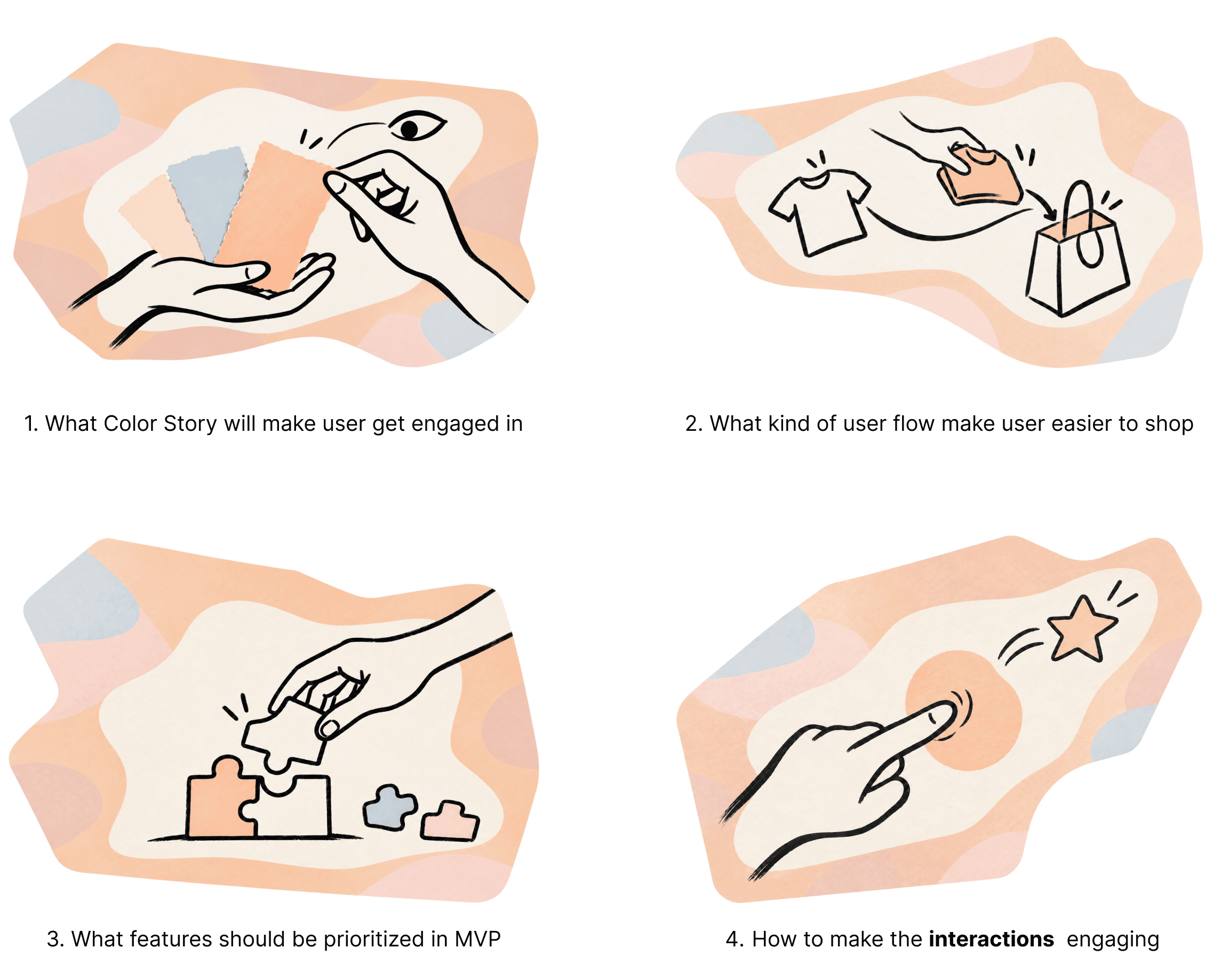
After identifying the core challenge, I started to think, as a UX designer, about how I could use design to reach that goal alongside the business and development contributions. To start with, I broke the challenge into four design problems.
Research
Identify design opportunities for business growth through competitive analysis
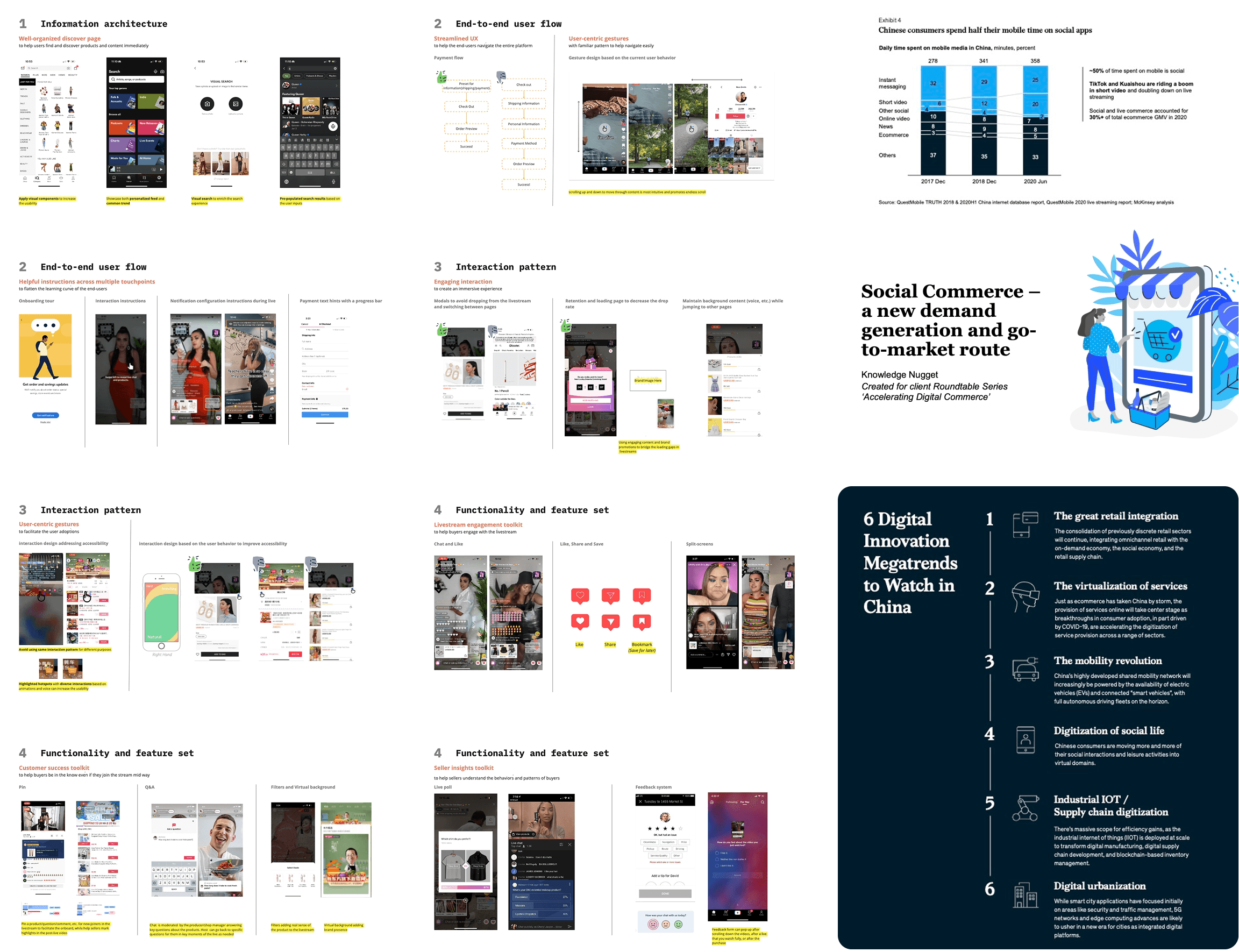
At the beginning of this project, I conducted extensive preliminary research, encompassing a variety of methodologies such as user research, competitive analysis, and trend analysis. These efforts were aimed at uncovering the pain points, motivations, and expectations of key stakeholders—ranging from influencers and live shopping hosts to Gen Z consumers.
See the detailed report below.
Research
Identify user personas so every team works with a unified focus on the target user
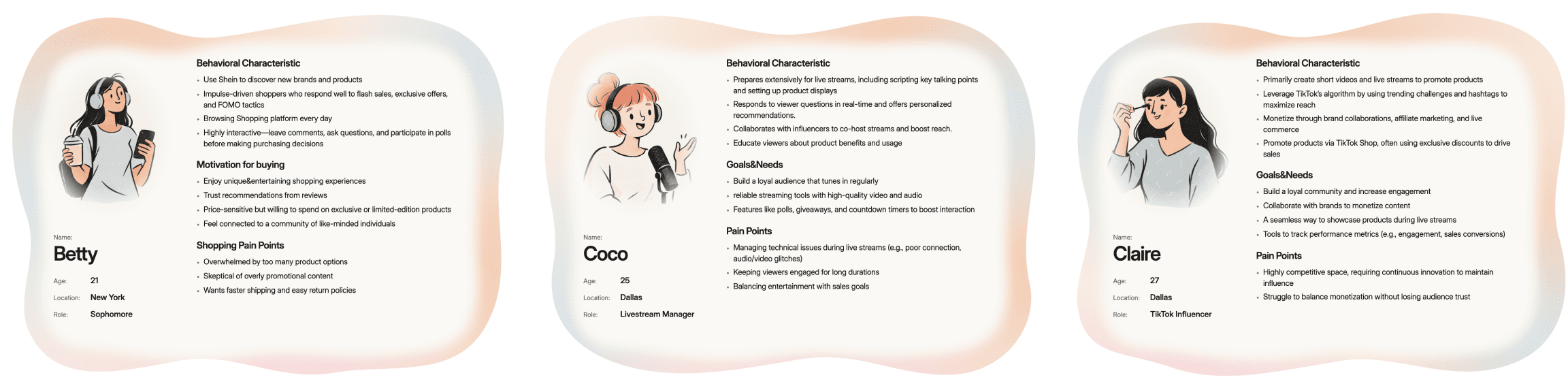
Through user interviews and qualitative surveys, I helped our client turn a vague target audience into a concrete, tangible representation, and gained further insight into how users want to interact with live shopping platforms, their pain points, and their potential needs.
Here are the three main groups our product set out to serve:
Insight 01
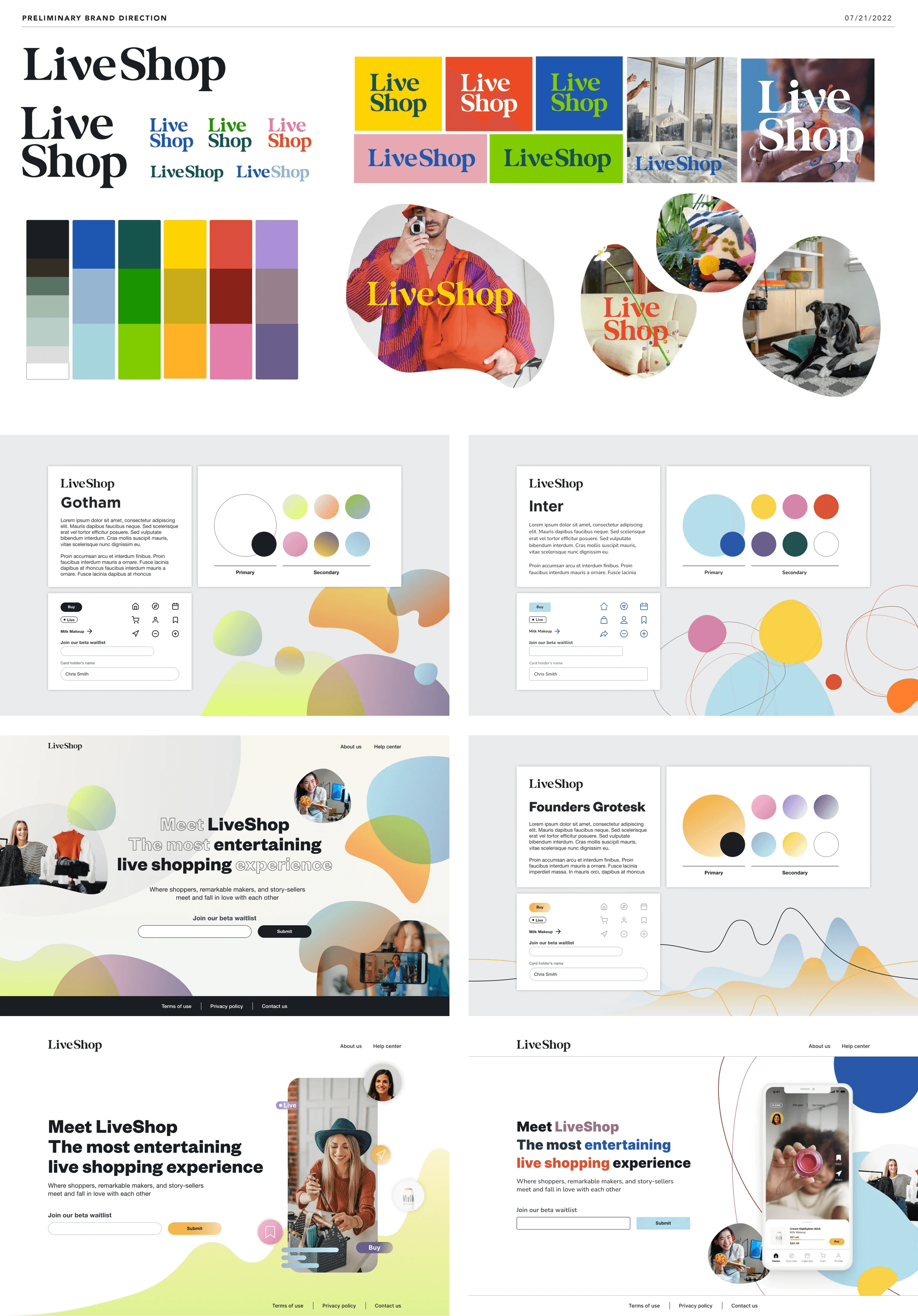
Warm and vibrant color represents the culture of Gen Z, while warm color boosts the desire to shop
While reviewing trend analysis in the research phase, I found that reports from McKinsey & Company highlight that Gen Z values personalization, interactivity, and social responsibility. Moreover, WGSN (a global trend forecasting agency) notes that Gen Z is drawn to bright, bold colors (like neon) and even dynamic gradients.
At the same time, the competitive analysis (TikTok, Snapchat, Instagram, and others) showed that warm tones can promote purchasing desire. Warm tones are naturally eye-catching and stand out more than cooler tones, which makes them effective for drawing attention to products, promotions, or calls to action.
After presenting the data and report analysis to our client, we decided to use a mixture of warm colors as the product's main color palette. This step involved exploring various design options and conducting quick usability tests to validate the aesthetic and functional appeal.
Insight 02
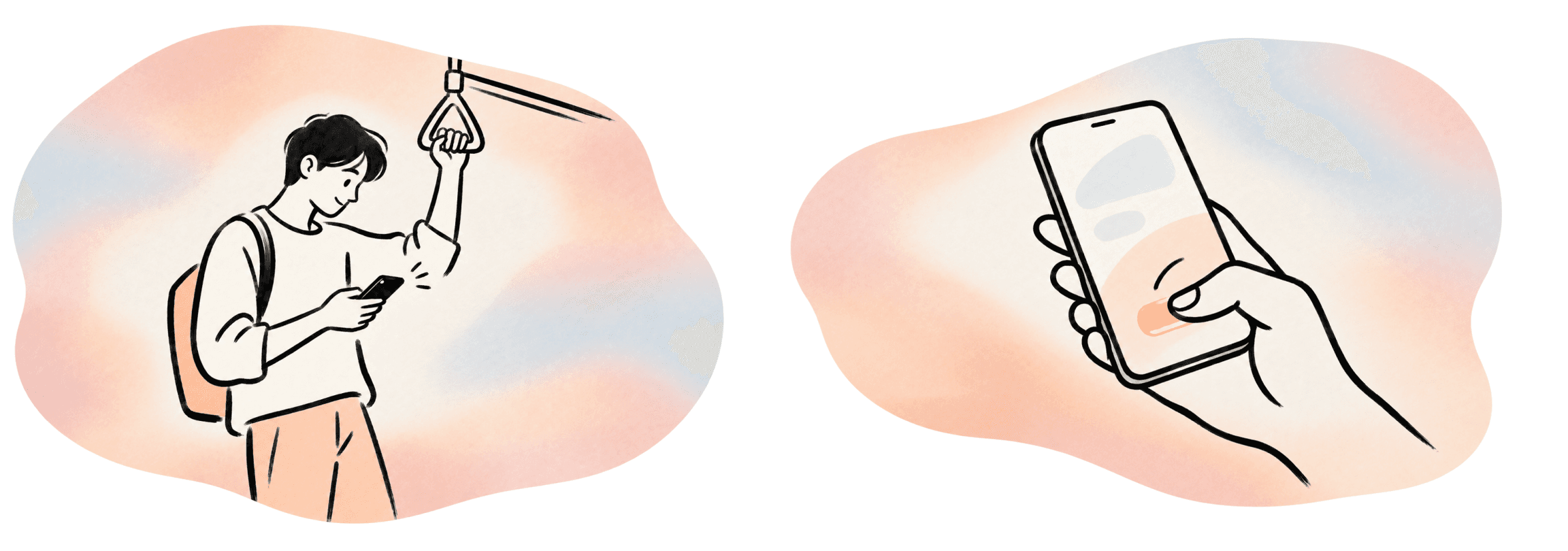
Taking care of user habits in single-hand mode is the key to retaining users
Through surveys and behavioral observations, we found that Gen Z users prefer to shop or browse information during fragmented free time. Moreover, they often use their phones with one hand, as they are usually engaged in other activities simultaneously, such as taking the subway or shopping at the grocery store. So it is crucial for designers to consider the usability and accessibility of single-hand mode.
In order to pitch the new designs to our client, I ran a team learning session on WCAG compliance and on NN Group guidance for usability and accessibility. I then presented the key results from rapid user tests and behavioral observations, to ensure that the design not only meets the standard UX requirements but also gains acceptance and satisfaction from users.
Insight 03
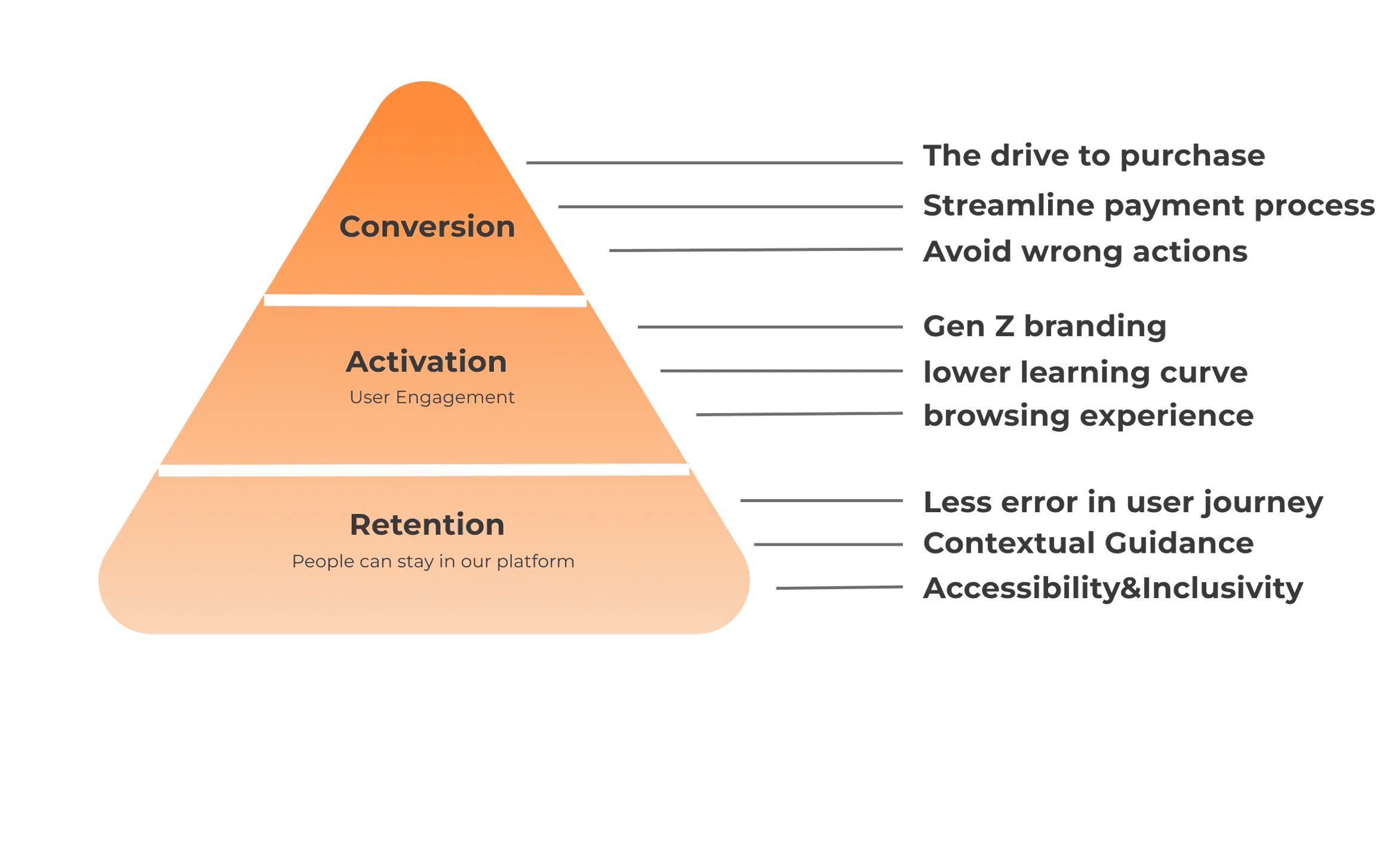
Streamlining the user flow so users can enjoy an immersive livestreamed experience
After conducting user interviews and surveys, and analyzing McKinsey customer reports, I, along with the business analyst, found that Gen Z prefer an immersive experience without distractions when watching livestreamed content. Data from digital product usage shows that Gen Z prefers simple, intuitive interfaces but also desires high levels of personalization. With those insights, we decided to simplify the user onboarding and shopping workflow, and to group features by priority using the Kano Model.
Ideation
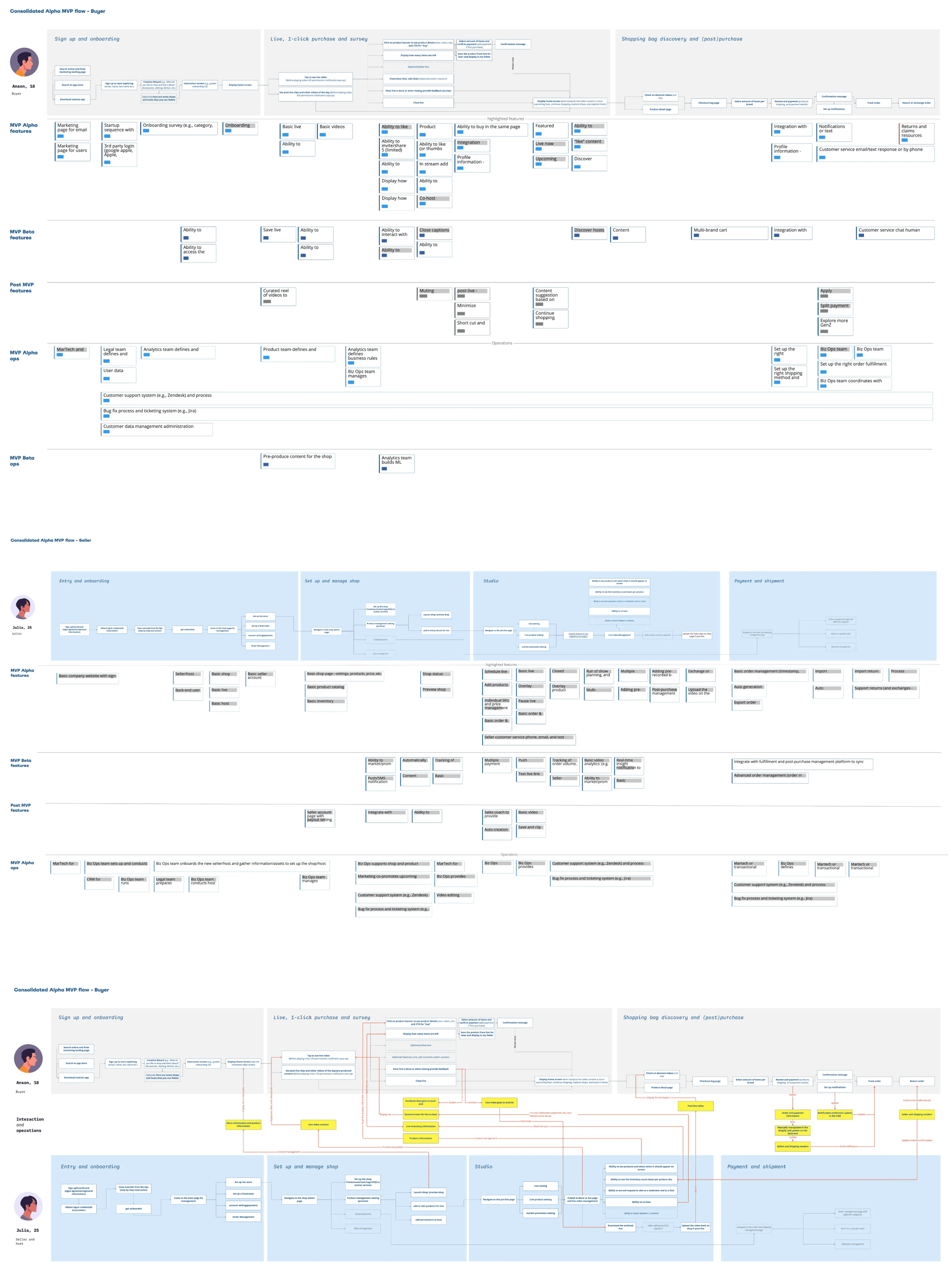
Crystallized a vague business objective into a clear user journey
The insights from this research phase not only informed my understanding of the live streaming ecosystem but also provided a solid foundation for the subsequent design process.
By synthesizing these insights, I was able to define clear design opportunities, such as enhancing interactivity, streamlining the purchasing journey, and creating tools that empower both creators and consumers. These outcomes directly guided me as I mapped out the user journey and user flow for different user groups. At the same time, I collaborated with the business team to prioritize and group features in each sprint based on business and design needs.
Design
Incorporating cross-team feedback at an early stage
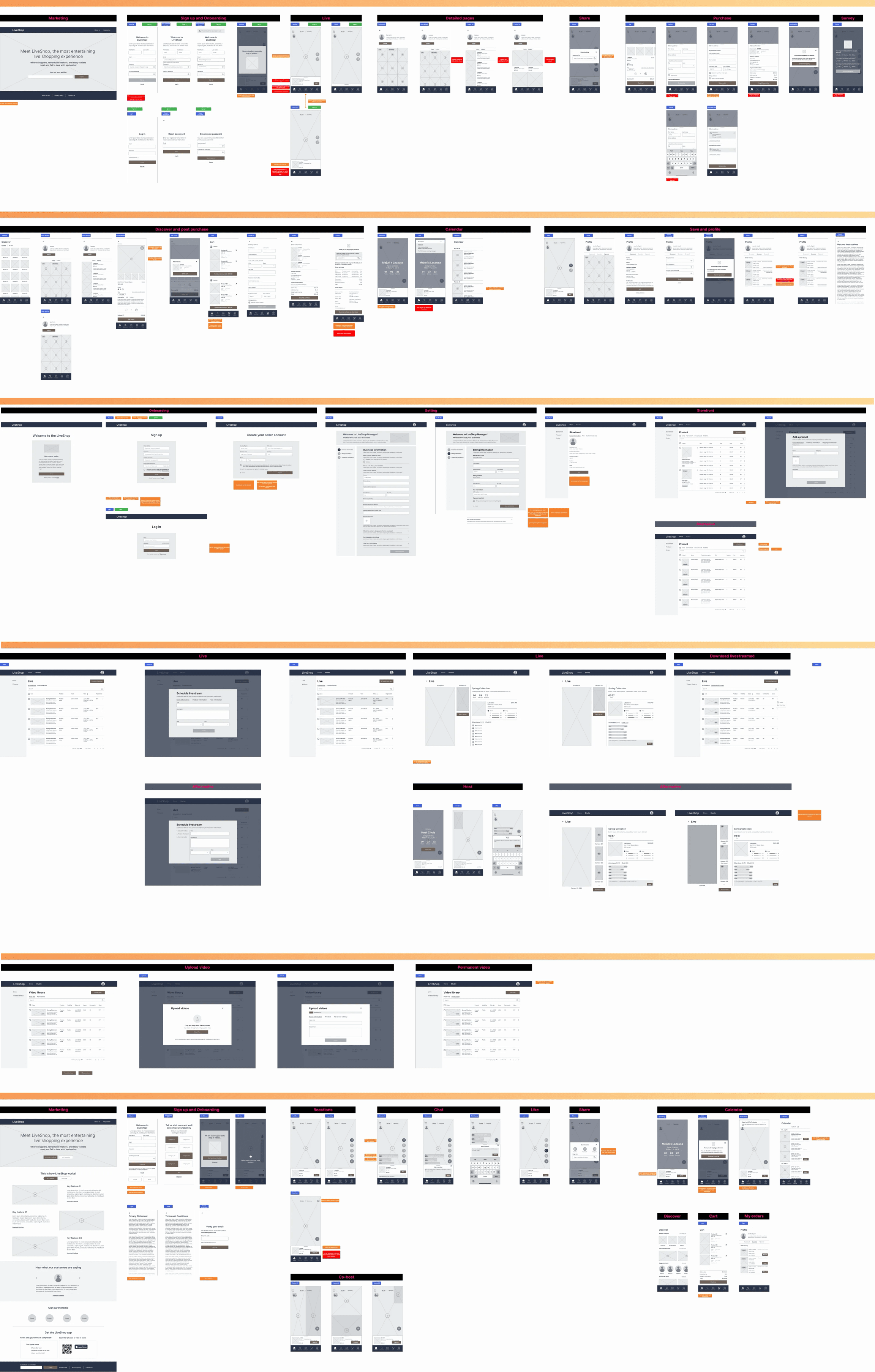
I transitioned into the design phase, beginning with low-fidelity wireframes to map out the core user flows and interface structure. These wireframes were iteratively refined based on feedback and insights gathered during the research phase and team discussion, ensuring alignment with user needs and business goals.
Testing
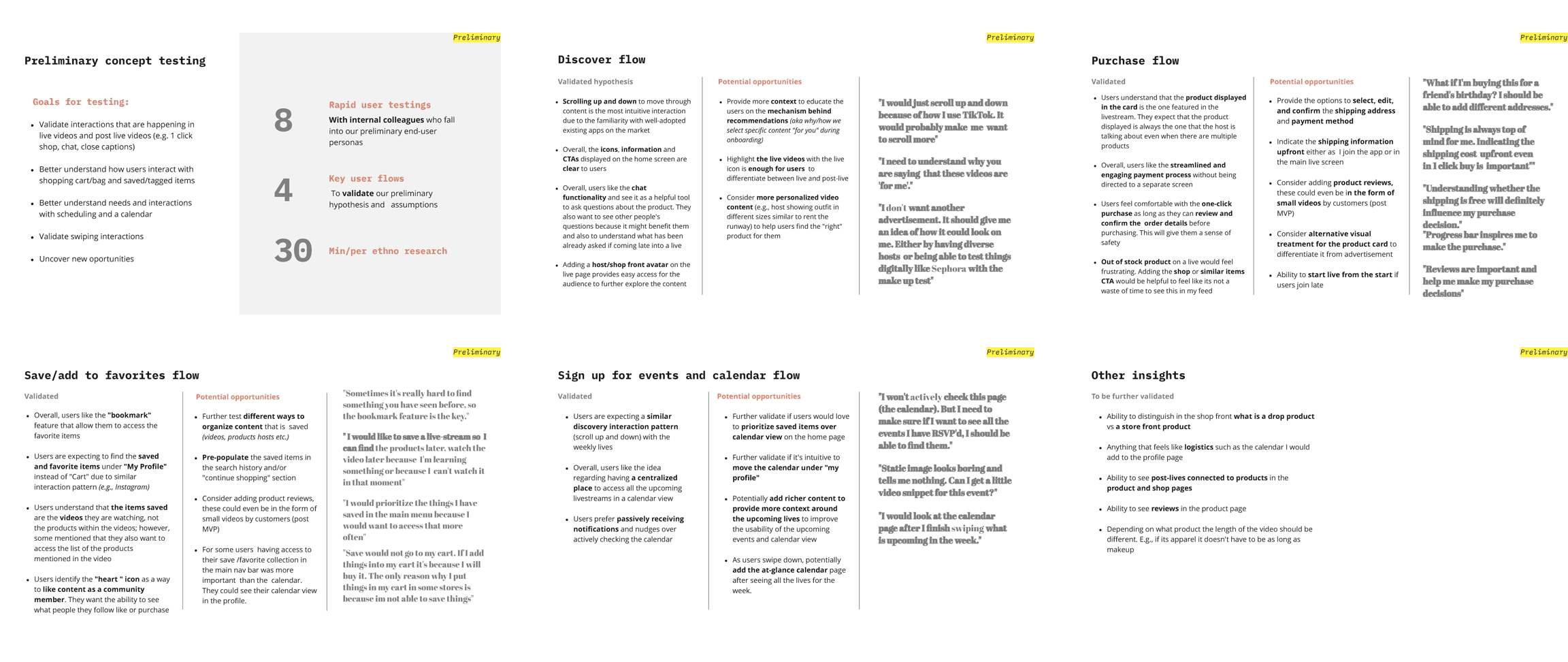
8 user testing sessions: validating usability before launch
During the beta phase of the product, we conducted 8 user testing sessions with potential users. These sessions were designed to gather actionable feedback on usability, functionality, and overall user experience. Through a combination of task-based testing, A/B testing, and in-depth interviews, we identified key pain points and areas for improvement in the whole user journey.
Design
Final design with an agile development process
Building on the insights from our comprehensive research and iterative design process, our product successfully launched in 2023, delivering a seamless and engaging live shopping experience tailored to the needs of influencers, Gen Z consumers, and live shopping hosts.
The clips below highlight the key features and interactions of the product, showing how our team transformed user insights into a dynamic and intuitive interface. From vibrant visuals that resonate with Gen Z.
Takeaways
Perks of communication and collaboration
Working in a consulting environment required me to quickly adapt to a wide range of industries, clients, and project scopes. I connected with 30+ people from our team and the client team within the first day of joining the project. As a designer, I collaborated closely with the client's team to gain design support. This honed my communication skills, as I had to effectively translate complex business goals into intuitive design solutions while aligning with stakeholders who often had limited design expertise.
Challenges of an unclear target in a new field
Consulting projects are fast-paced and often involve diving into unfamiliar domains. This environment pushed me to develop rapid learning skills, enabling me to quickly grasp industry-specific challenges and user needs.
At the same time, I had to help the client define the scope and clarify blockers. That experience strengthened my ability to think critically, prioritize effectively, and deliver impactful results on a condensed timeline.
Learned from the client, and taught them too
Consulting experience required me to constantly align my design decisions with broader business strategies and measurable outcomes.
This dual focus taught me to advocate for user-centered design while demonstrating its value in achieving business goals, a skill that required clear communication, negotiation, and the ability to present design rationale in a way that resonated with non-design stakeholders.